
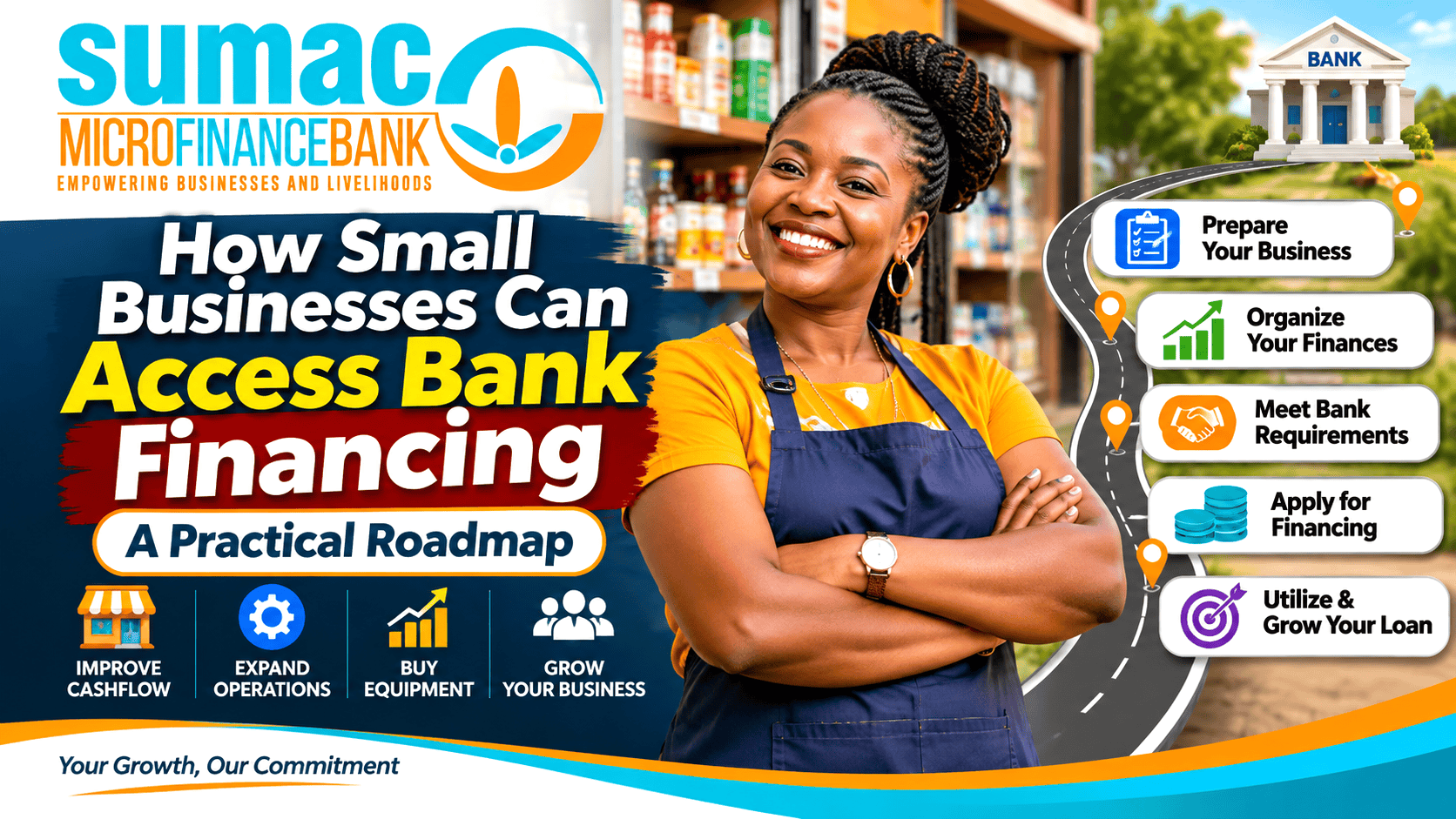
Access to finance remains one of the most decisive factors in whether a small business stagnates or scales. Working capital, equipment, inventory, expansion, or cash-flow support can transform operations, yet many small enterprises in Kenya struggle to secure formal bank funding. The gap is not always caused by a lack of viable businesses; it often stems from mismatches between what lenders require and what small operators can readily provide.
Understanding the barriers and systematically addressing them dramatically improves the chances of approval. Below is a clear, practical guide that small business owners can follow to position themselves for bank financing.
Lenders assess risk. Small businesses are frequently viewed as higher risk because of limited formal records, irregular cash flows, weak collateral, short operating history, or incomplete registration. Banks and microfinance institutions look for evidence that the business can generate enough cash to service the loan and that the borrower has the discipline to repay.
The most common obstacles include:
Addressing these issues before approaching a lender is far more effective than hoping the bank will overlook them.
Start with the basics that signal seriousness and reduce perceived risk:
Formalisation does not require becoming a large corporation overnight. It simply means operating in a way that allows a third party to understand and verify the business.
Many small businesses have never borrowed formally, which leaves them with a thin or non-existent credit history. Start small if necessary. A modest facility that is repaid on time creates a positive record. Avoid multiple simultaneous digital loans that can clutter the credit reference bureau profile with high-cost, short-term debt.
Where possible, maintain relationships with suppliers who can provide trade references. Consistent, documented dealings with suppliers demonstrate reliability even before a bank relationship exists.
Lenders want to know three things: how much is needed, exactly what it will be used for, and how it will be repaid. Prepare:
A well-prepared application that answers these questions in advance reduces processing time and increases the likelihood of approval.
Not every loan product suits every business. Match the facility to the actual need:
Microfinance banks and some commercial banks have developed products specifically for smaller enterprises. Institutions such as Sumac Microfinance Bank, for example, offer facilities designed around the realities of micro and small businesses — including more flexible collateral options, faster processing, and products that accept business stock, chattels, or rental assignment in addition to traditional security. Their focus on relationship banking and understanding of local enterprise needs makes them particularly accessible for businesses that may not yet meet the stricter thresholds of larger commercial banks.
Approaching an institution whose products and risk appetite align with the size and nature of the business improves both the chance of success and the quality of the relationship thereafter.
Traditional title deeds remain powerful, but they are not the only form of security. Many lenders accept:
Where conventional collateral is limited, explore products that place greater weight on cash-flow, character, and the productive use of the funds. Presenting a realistic package of available security, rather than assuming only land titles will suffice, expands options.
The strongest financing relationships are rarely built in a single urgent application. Open an account, operate it actively, meet the relationship manager, and allow the institution to understand the business over time. When the need for finance arises, the lender already has visibility into the operation and a track record of engagement.
Consistent, transparent communication also helps if challenges arise later. Lenders are more willing to restructure or support a borrower they know and trust than one who appears only when in difficulty.
Many small businesses improve their access to finance by beginning with a smaller, manageable facility, using it productively, and repaying it diligently. Successful repayment opens the door to larger amounts and better terms on subsequent applications. Trying to leap to a large facility without a demonstrated track record often leads to rejection or overly stringent conditions.
Access to bank financing is rarely granted on ambition alone. It is earned through formalisation, clean records, clear purpose, realistic projections, appropriate security, and demonstrated reliability. Small businesses that treat these elements as ongoing disciplines rather than last-minute requirements stand a far stronger chance of securing the capital they need.
The process requires effort, but the reward is substantial: working capital that smooths operations, equipment that raises productivity, or expansion that creates jobs and income. By closing the common gaps and approaching the right institutions with a well-prepared case, small enterprises can move from being underserved to being actively financed — and from surviving to growing.